
There is a phrase that has drifted through parenting conversations for about a decade now, and it is a terrible one. “Failure to launch” entered the cultural lexicon as shorthand for something we couldn’t quite name: the young person who finishes school and then seems to stall, who moves home or drifts between obligations or sleeps too late, who seems, in some indefinable way, to be behind. Behind what, exactly?
I’m a parent of adult children, and Liminal Learning — the developmental program I’ve been building alongside some extraordinary colleagues — is as personal as any professional endeavour I have undertaken. I’ve always been irked by the “failure to launch” framing. It bothers me not only because it is inaccurate, but because it is actively making things worse, and not only for the young people at whom it is aimed.
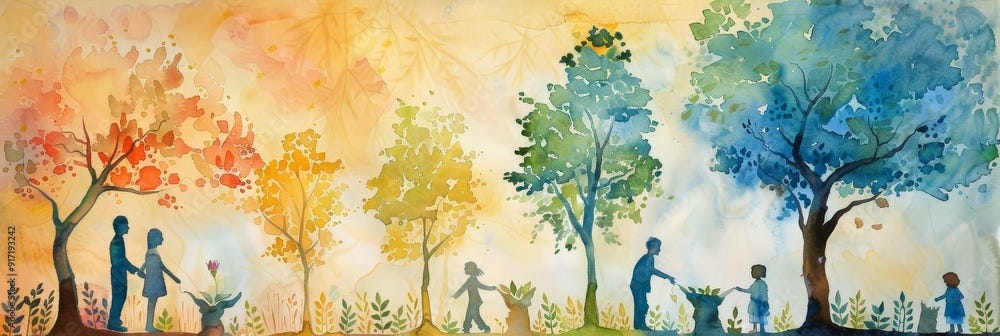
What “failure to launch” actually describes
The phrase borrows its authority from developmental psychology while jettisoning the part of developmental science that would complicate the story: the part about context. Carol Dweck’s decades of research on mindset, and Donald Winnicott’s foundational work on holding environments, both insist that what develops in a young person is always a response to what the surrounding environment provides. Skills, motivation, and confidence are outcomes of whether the environment has offered the kind of feedback loops, real stakes, and relational scaffolding that allow development to proceed. When those conditions are absent or chaotic, the apparent stillness of a young person is a reasonable adaptation, not a damning character verdict.
If we’re going to point to something we’re sensing is wrong with how development is unfolding for this generation, I think we’re trying to understand young adults who are struggling to find traction in their everyday life after high school. They start things and stop. They are anxious in ways that feel disproportionate to what they’re experiencing. They are hard to speak with and to emotionally reach. All of these vague signs are real and worth taking seriously.
The mistake we’re making as adults trying to understand what’s going wrong is where we locate the problem: in the young person’s will or readiness, in their personality or their personal failings. And if that’s where we’re pointing to the problem, we’re producing interventions aimed at motivating, pushing, or re-training someone who is not broken. Individual young people are not failing anything. The problem partly lies in structural conditions that make traction genuinely hard to find, and partly in a cultural vacuum that has left young people without the one thing every human society before ours found indispensable: a communal, witnessed crossing into adult life.

What makes this moment different
I have written at length in this Substack series about what the research shows. Young people across the Western world have gone from being among the happiest age groups in their countries to among the unhappiest in roughly a decade, a reversal documented in the World Happiness Report with remarkable consistency. Housing costs as a percentage of median income have more than doubled since the previous generation; in Toronto and Vancouver, home-ownership costs exceeded 80% of median household income by 2023, according to RBC’s housing affordability reports, compared to 30–40% a generation earlier. Real wages for non-professional workers stagnated relative to productivity growth across three decades, a pattern extensively documented by the Centre for the Study of Living Standards. The American Time Use Survey shows that Americans aged 15–24 spent substantially less time in face-to-face social leisure activities by the late 2010s than they did in 2003. What’s being called the loneliness epidemic has some dire data behind it: a meta-analysis by Holt-Lunstad and colleagues (2010, PLoS Medicine), covering 148 studies and over 308,000 participants, found that social isolation increases mortality risk at rates comparable to smoking fifteen cigarettes per day or clinical obesity.
THOSE are the conditions. What I want to dive deeper into now is what those conditions do to the developmental landscape around young people.
The feedback loops that make the transition to adulthood understandable — the chains of effort-meets-consequence through which young people learn what they’re capable of and what the world expects of them — have become near-impossible to read. When housing costs make independent living impossible for years at a stretch, the developmental milestone of managing real stakes and real responsibility doesn’t arrive on any recognizable schedule. When contract employment has replaced stable career entry, the story of “work hard and something will carry forward” becomes hard to believe, because sometimes it is true and sometimes the contract just ends. And when young people don’t get the minimum wage job their parents seemed to have started with, when they don’t even get an email response never mind an interview to show up for, when they’ve filled out endless online volunteer applications in countless “portals” that don’t even acknowledge receipt, when there is no feedback at all after so many bids for attention, or any semblance of feedback on how to improve, paralysis sets in.
What young people are navigating is the vertiginous experience of effort that doesn’t reliably connect to outcome, in conditions designed by and for previous generations, without any ceremony that marks and makes sense of the crossing they are nonetheless in the middle of making.
Stephen Jenkinson, writing in Come of Age (2018), makes this critical claim: a society that has stopped initiating its young has, by the same structural failure, stopped producing elders. The generation of parents now watching their adult children stall and drift is the same generation that was not adequately initiated into its own adulthood, and is now being asked to hold a function it was never taught to recognize as its own. We’ve got a serious multigenerational breakage that will NOT be fixed with a 12-week run of our “gold standard” cognitive-behavioural therapy. This is precisely the gap that Liminal Learning is trying to address: it’s a collective effort and a cultural container we’re trying to repair. But it’s no small task.
What the transition to adulthood has always required
The French ethnographer Arnold van Gennep, in his 1909 study The Rites of Passage, identified a three-phase structure that human societies have used, across cultures and millennia, to mark transitions from one social status to another: separation (removal from the previous social location), threshold (the in-between condition that has its own distinct ritual logic), and integration (reincorporation into the community with a new status). Van Gennep was not arguing that all rituals are good or that tradition is always wise. He was observing that this architecture appears too consistently across too many cultures to be accidental.
The Scottish anthropologist Victor Turner, working from van Gennep’s framework in his 1969 study The Ritual Process, gave the middle phase its contemporary name: liminality. Turner’s decades of fieldwork with the Ndembu of Zambia, and his subsequent comparative analysis, found that the liminal phase generates a specific social bond he called communitas: an immediate, egalitarian, intensely felt connection between people sharing a threshold experience together. It is the opposite of ordinary social hierarchy. It does not last. But what the young person learns about themselves and about their capacity for genuine relationship can be carried forward in ways that ordinary social life cannot produce on its own.
What contemporary Western society has done — with extraordinary efficiency and almost no awareness — is retain the events of the developmental transition while gutting the threshold. We have the separation (leaving school, leaving home) and some version of the incorporation (getting a job, signing a lease), but we have hollowed out the liminal phase itself. Young people have no witnessed, recognized crossing.
There’s no community to hold them through this transition, yet we are pointing to them failing “to launch” FROM something TO something else, right? There is no deliberate suspension of ordinary categories to let teenagers find out who they are or wish to be and when they lament the lack of time or direction for this exploration, we are impatient, scared, and unhelpful.
The depth psychologist Bill Plotkin, who has spent over four decades building a Western approach to rites of passage at the Animas Valley Institute in Colorado suggests that the West has produced, over several generations, vast numbers of what he calls uninitiated adolescent-adults: people who hold institutional power and social function while missing the developmental capacity that adulthood once required. Plotkin is careful to situate his work as Western in its lineage (Jung, depth psychology, the Romantic poets), in respectful conversation with indigenous vision-quest traditions rather than appropriating them.
What Liminal Learning offers
Liminal Learning did not invent the problem it is addressing. The lineage, recognized by van Gennep, Turner, Plotkin, Jenkinson, and the many indigenous traditions these thinkers are in careful conversation with, is the inheritance. What we have tried to build is a response to the specific conditions of the present developmental landscape: a one-year container that holds the threshold for young adults navigating the crossing in 2026 and beyond, inside a civilizational moment that makes the ordinary reintegration scripts unavailable.
The Quest. The year opens with a week in the woods. Away from the digital grooves of habit and audience, participants step out of their existing identity narratives and into something more like an awe-inspiring encounter with the natural world. They participate in this encounter with peers who are also in the crossing and with mentors who care about the quality of their questions rather than its applicability on a CV. This is the beginning of the threshold in van Gennep’s sense: the young person is removed from their ordinary social location and held in a liminal condition that has its own logic. Turner’s communitas is what forms between participants. Part of it is deliberately designed, and part is mysteriously emergent. The specific bond that arises when ordinary status hierarchies are suspended and people become simply present to one another in shared vulnerability is both predictable and feels magical.
The Quest is also the beginning of the one-year container, not its climax. This is a direct corrective to a failure mode that plagues the wider field of wilderness-based and retreat-based programming: treating the multi-day immersive experience as the developmental event, leaving participants with a transformative memory and a group chat. Plotkin himself has acknowledged that the integration architecture after the initial wilderness experience is the underbuilt part of most existing programs. Liminal Learning’s design focuses the entire year on that integration and expansion into the everyday world of our community members.
The Hub. Following the Quest, participants enter a sustained weekly learning community that runs across the arc of the year. This is where the Quest’s embodied, pre-conceptual experience finds language. The insights are found through the patient oscillation between what was felt in the woods and what it means for the actual choices participants are making in the real conditions of their lives. The weekly rhythm creates habits of responsibility, presence, and ritualized care. Every wisdom tradition that has produced lasting transformation has had some version of this architectural form: the Buddhist sangha, the Quaker clearness committee, the Jewish chavrusa, the medieval guild’s journeyman gatherings. What these forms share is the sustained community of practice that holds an initiatory experience over time rather than letting it metabolize in isolation. The contemporary West has largely lost the form. The Hub is its restoration in a geographically distributed, digitally mediated context, and it is where the crossing becomes a regular practice rather than an awesome but fading event.
The Heist. At the centre of the year sits a social-impact project we call a Heist (except that in our version, instead of stealing the loot, we put treasure into the world). It’s a contribution to a real problem, designed and executed by small groups of three or four participants, with real-world consequences if they don’t follow through. This is Turner’s communitas in its active form: the generative bond that arises when people in shared threshold experience take on work that exceeds any individual’s capacity. It is also, in Erikson’s developmental language, the early emergence of generativity: the capacity to care about something beyond one’s own interests and to contribute to life’s unfolding. The teaching methodology and tools for building and launching a Heist is evidence-based and tested over a decade of work in my academic research lab. Young people learn skills to oscillate between conceptual frameworks and design principles on the one hand, and scientific practices and experiential testing on the other, to pull off a project that puts some small “treasure” into the world. The young people are doing something real, with people they have come to deeply care about, at a level of challenge that calls on capacities they didn’t know they had.
Being useful to someone who respects you, and having that contribution register and carry forward, is among the more powerful antidotes to purposelessness I have encountered in twenty-five years of working with young adults. It cannot be manufactured by reassurance or simulated by internships that are really extended passive observation sessions. It has to be real, based in action.
The Community. The cohort that moves through the year together is not incidental to the program. It is van Gennep’s incorporation phase: the community into which the young person emerges changed, and to which they bring what they’ve found. The broader Community is an international network of adult practitioners and organizations across ecological, entrepreneurial, contemplative, scholarly, and civic domains — the people who can receive the Heist’s work and take young adults into the next phase of real contribution. Parents and older adults accompany the arc throughout, not as coaches standing on the outside, but as people doing their own work of becoming what Jenkinson calls the elder-as-function that the community actually needs. This intergenerational container is a structural commitment, not an add-on, and we hope to be building it for decades to come.
What parents notice
The first thing parents see in their adult children is something akin to a change in posture, in the literal and figurative sense. Parents notice a change in how their child is carrying themselves: They are smiling more, joyful in the telling of their stories, shy with their insights, but keen to share how they “feel like they’ve changed so much!” The uncertainty doesn’t go away — most participants are still quite confused about what comes next — but the uncertainty feels like their work to figure out and they know they’ve got others on the path with them.
The second is a shift in the quality of conversation. Parents start being asked real questions: what do you think about this, not just what should I do. The young person is bringing a perspective to the table rather than asking what to think or how everyone else is doing it. This is what Winnicott would recognize as the restoration of genuine agency: the capacity to use the people around you as thinking partners rather than safety nets.
The third, which I find most moving, is the arrival of something like direction. I’m not talking about a five-year plan; more like a sense of what is worth showing up for. The young people who have completed the Quest and the Heist develop a clearer sense of what they care about and what they are capable of. Those two things together — concrete self-knowledge and the experience of their observabe contribution — are the most essential foundation for any meaningful adult life.
What this young generation is asking of us
I started this piece by arguing that “failure to launch” is a damaging frame. I think the phrase reveals something about our discomfort with the more difficult alternative, which is that we, as parents and educators and institutions, have not been particularly good at building the thresholds our young people need. We inherited a set of cultural forms that had been doing a version of this work and watched those forms hollow out without caring that it was happening.
The young people I see in Liminal Learning are not failing. They arrive anxious, inattentive, uncertain, and sometimes genuinely depressed, and all of that is real. But underneath the anxiety is something that hasn’t been destroyed, only hushed: genuine curiosity, real capacity, a desire to matter in ways that are larger than personal advancement. I find this wholly worth betting on.
Most parents of adult children know the particular exhaustion of performing steadiness for someone who needs us to be honest about the uncertainty around us instead. We reach for advice too quickly. We lecture or withdraw when we should stay open. The crossing has to be held by a generation that knows something about what it costs. We are that generation. How to accept that function — as elders, as mentors, as the community that receives them — is the question we are asking as an organization at Liminal Learning.
I don’t have a tidy answer. We have a year-long program, cohorts of young people who were brave enough to walk through the door, and decades of research suggesting we are doing something that helps.
Applications for Liminal Learning’s next cohort in Ontario, Canada are now open. We’re a non-profit doing our best to offer the program at cost. We also have a few scholarships positions left. If you’re curious to know more, reach out directly to me via email (granici@mcmaster.ca) or visit our website and book a call.
Great article Isabela! I was happy to learn the origin story of liminality and communitas! Working now with Tibetan chaplaincy, I recognize a parallel with working with the various Bardos of birth, becoming, and death. I also really appreciate hearing your voice through the writing, when so many texts are now standardized AI output… Thanks for sharing your work and ideas!
What important work for our times...beautifully written Isabela. Truly pointing to the moral duty of our generation to take a step back from the dysfunctions of our modern society, question so many of the givens, and recognise the urgency of what we can offer young adults to set paths of hope for the rest of their journeys. And walking your talk, being in action in offering practical experiences!